

Summary
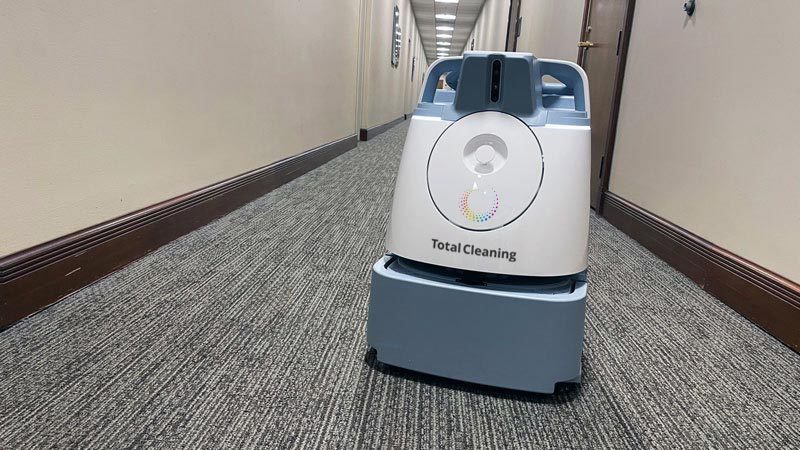
Autonomous cleaning technology has become an effective support tool in modern commercial cleaning programs. Robotic floor equipment can improve consistency, support crew efficiency, and enhance documentation.
Facilities see the greatest value in robotic cleaning as part of a broader strategy that includes trained technicians, supervision, and defined cleaning processes. The future isn’t robots replacing people. It’s robots supporting predictable and measurable cleaning work with outcomes that can be verified.
Today’s robotic scrubbers and vacuums use advanced mapping, obstacle detection, and reporting capabilities that help facilities maintain a consistent floor appearance across large, predictable spaces. However, robotics is most effective when implemented as part of a broader professional janitorial cleaning program that includes supervision, quality control, and experienced technicians.
Where Robotic Cleaning Makes the Most Sense
Robots perform best in environments with consistent layouts and predictable traffic patterns. Large corridors, lobbies, warehouses, healthcare hallways, airports, and educational facilities are strong use cases where autonomous equipment can manage repetitive floor maintenance while cleaning teams focus on sanitation, detailing, and high-touch disinfection.
This division of responsibility improves labor efficiency without sacrificing cleaning quality. Rather than replacing staff, robots help reduce repetitive strain, improve coverage consistency, and allow technicians to focus on tasks requiring judgment, adaptability, and attention to detail, especially within large-scale commercial cleaning programs.
Facilities that successfully adopt robotic cleaning typically view automation as a support tool that enhances existing cleaning programs rather than a standalone solution. This is particularly true in healthcare, education, and high-traffic public environments where consistency and accountability are critical.
The Visibility and Accountability Advantage
One of the most valuable benefits of robotic cleaning equipment is documentation. Many systems provide route tracking, performance reporting, and confirmation of completed cleaning cycles. When integrated into a managed cleaning program, this data improves accountability, supports scheduling decisions, and provides reassurance to facility stakeholders.
Technology-driven reporting also complements broader quality assurance and inspection programs by helping identify coverage gaps, optimize cleaning frequency, and maintain consistent floor presentation across shifts and locations.
However, robots are not a universal solution. Cluttered environments, detailed sanitation work, restroom maintenance, and unpredictable facility conditions still require trained professionals. Facilities relying solely on automation often discover that workflow integration, maintenance, and supervision remain essential for reliable outcomes.
Why Human Expertise Still Matters (in fact, more than ever)
Robotic equipment cannot replace situational awareness, adaptability, or the ability to respond to unexpected cleaning needs. Corner detailing, spill response, high-touch sanitation, and infection-control protocols continue to depend on trained janitorial teams.
This becomes especially evident following renovations or buildouts, where post-construction cleaning and detailed surface restoration require manual expertise, specialty tools, and careful surface protection.
The most effective programs combine robotics with structured supervision, defined scopes of work, and ongoing quality verification.
This hybrid approach delivers the efficiency of automation while preserving the reliability and flexibility of professional cleaning staff.
Successful facilities recognize that technology enhances consistency, but it’s the people who ensure accountability, safety, and service quality.
The Future of Commercial Floor Care
Successful adoption depends on thoughtful implementation rather than technology alone. Facilities should evaluate building layout, flooring types, traffic density, staffing goals, and supervision processes before introducing robotic equipment.
When robotics technology is paired with experienced commercial cleaning teams and documented service programs, organizations can improve efficiency without sacrificing quality or responsiveness.
Robotic cleaning represents an evolution in facility maintenance, helping organizations maintain consistent floor care while allowing cleaning teams to focus on higher-value sanitation, occupant experience, and risk management priorities.
The future of commercial cleaning is not robotic or human — it’s a strategic mix of both.
Frequently Asked Questions about Robotic Cleaning Technology
No. Cleaning robots are best used as support tools for repetitive floor tasks, while trained professionals handle detail work, sanitation, and quality assurance.
They perform best in large, open, predictable environments such as lobbies, corridors, warehouses, and healthcare hallways.
Yes. Robots can provide consistent coverage and documentation, but consistency still depends on supervision, maintenance, and integration into a broader cleaning program.
Robots struggle with cluttered environments, corners, detailed cleaning, raised surfaces, and unexpected conditions that require judgment and adaptability.
Facilities should evaluate layout, traffic patterns, staffing challenges, and how robotics will integrate with existing cleaning scopes and supervision.
They can support floor maintenance in certain areas, but healthcare environments still require trained EVS teams for infection prevention, high-touch cleaning, and compliance.
Is your cleaning partner using technology to be more efficient?
If you’re already a Total Cleaning client, thank you for trusting us. We don’t chase cheap bids because we refuse to create surprises later. We price to deliver exactly what we commit to.
If you’re reviewing vendors this quarter and want clarity without pressure, we can help. A performance audit and walkthrough can quickly reveal what your current program is actually delivering versus what’s on paper.